

Unwanted Guest: Parasite Attached To Conservation Research
- Scott Lockhart

- Jan 16
- 2 min read
Important conservation research into parasites and their relation to their hosts has been conducted by André Kaufer Leite, Jaqueline Bianque de Oliveira, Moacir Santos Tinôco, Tércio da Silva Melo & Geraldo Jorge Barbosa de Moura, in north-eastern Brazil on the endangered Bahia Sand Dune Lizard Glaucomastix abaetensis.
The Sand Dune Lizard is endemic to Brazil and inhabits sandy habitats along the coast. They are particularly colourful with length-way stripes of green and yellow from flank to tail. They also have blue and white spotted hind legs and feet. Males are usually larger than females.
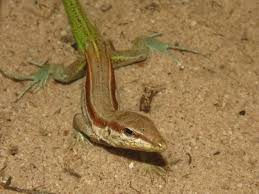
Less than half, around 25%, of 166 individuals recorded in restinga vegetation were infected with a number of parasites. 21% were infected with a single parasite species. 7 species of parasites were found across the group. 4 of said species have never been recorded before.

With this information, there could be a chance to identify certain links that will help save this species from extinction. Understanding how, when and why they are being infected is crucial to their survival. Measures can then be taken to regulate and treat if necessary.
It may be safe to say that parasites are not the number one factor to drive a scarcity of populations. However, it certainly doesn't help matters. Insects feeding on certain food stuffs, left behind by us humans, will be the first hosts of the parasites. Thereafter, the lizards would feed on the insect to inherit the microfauna. The chain carries on, circles endlessly and damages the final host, in this case, the lizard.
Us as tourists predominantly take the blame and rightly so. Conditions that these lizards are in will be contributed to by us. We have to stem the tide. Ongoing conservation efforts need to be publicly recognised in order to help grow this species of lizard back to safe numbers.
Comments